

What is Juneteenth?: An Important Commemoration of Black Liberation
Happy Juneteenth weekend! As we continue all weekend long with the celebrations, the cookouts, and the economic intentionality this holiday inspires, let’s talk a little about the history behind what is commonly known as Emancipation Day and often referred to as “Black Independence Day.”
When I taught African American Studies as a high school elective, one of my favorite parts was experiencing teens (and sometimes colleagues) discovering for the first time facts they’d not been privy to during their exposure to the diluted U.S. History curriculum generally taught in American elementary and secondary schools. I often sprinkle some of this history into my novels. In fact, my historical western Untamed ends with the townsfolk holding a Juneteenth celebration at the hero’s ranch.
Although Juneteenth (June 19, 1865) is often referred to as the day slavery was finally ended in the U.S., it was not. It was, however, the day the last enslaved people held by the Confederacy—deep in Galveston, Texas—learned they had been freed by the terms of the Emancipation Proclamation dated January 1, 1863, now that the final battle of the Civil War had ended (almost two months earlier) and the Union had suppressed the rebellion of the South.
What many overlook about this second Emancipation Proclamation (yes, there was more than one), is that by its express terms, it was never intended to end slavery in the U.S. It was issued, as expressly stated in the document, as “a fit and necessary war tactic” to suppress the rebellion of the southern states by freeing “all persons held as slaves within the designated states.” The designated states referred only to those “in rebellion against the United States” (or those which had seceded from the Union). Those enslaved persons held in the slave states that had not seceded from the Union were not covered by this proclamation.
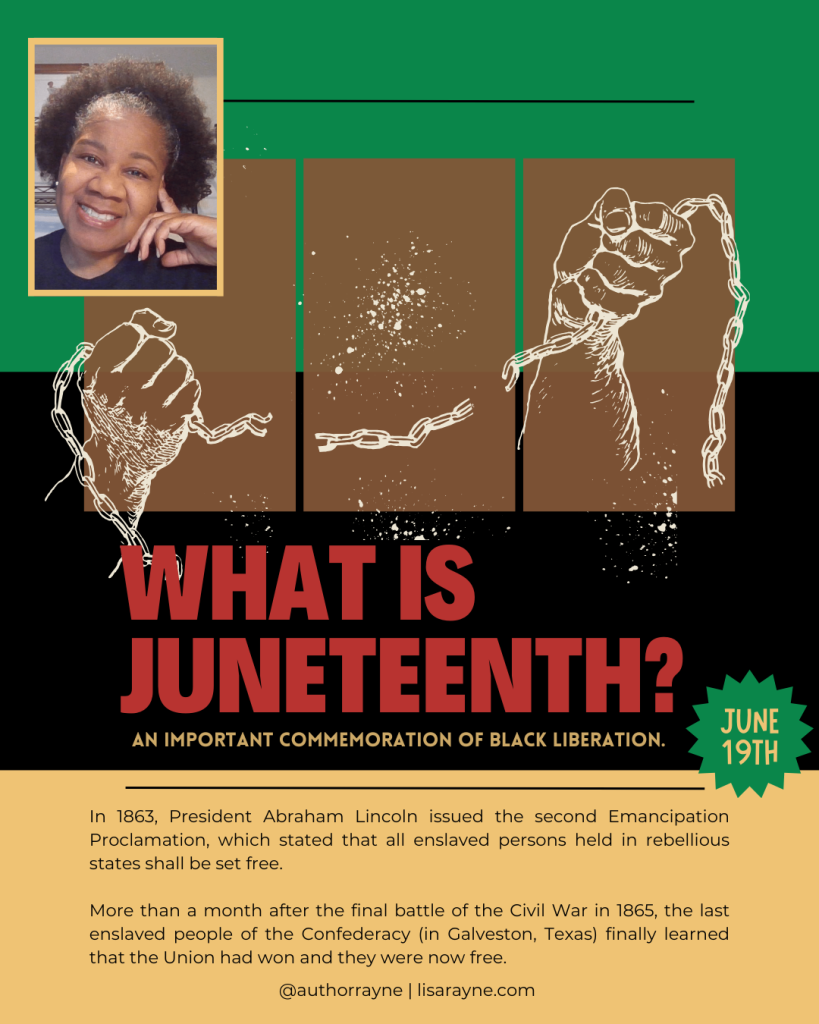
The preliminary Emancipation Proclamation was issued on September 22, 1862. This initial proclamation gave the seceded states the option to return to the Union voluntarily by January 1, 1863, and keep their enslaved Black laborers or adhere to their secession and have those they held enslaved freed on that date. The Confederate states held firm, and Abraham Lincoln used this as grounds to reframe the character of the Civil War. Lincoln intended the second (and final) Emancipation Proclamation to inspire enslaved people in the Confederacy and those that had been emancipated to support the Union cause, and to keep England and France (countries that had already outlawed slavery) from giving political recognition and military aid to the Confederacy.
By its terms, the final Emancipation Proclamation gave Union soldiers the legal authority to seize as war bounty any and all enslaved persons held as property in the Confederate states. Such seizure, however, would depend upon a military victory in the territories affected. Enslaved persons held by those in the Union slave states, like Missouri (where I’m from) and the four other Border States (Delaware, Maryland, Kentucky, and West Virginia), were expressly excluded from the Emancipation Proclamation’s edict. Accordingly, the institution of slavery was not abolished by the terms of the Emancipation Proclamation and remained legal in five Union states plus any Confederate territories that had not yet been suppressed by Union forces.
Slavery was legally ended in the U.S. (except as punishment for a crime) after the ratification of the 13th Amendment to the Constitution on December 6, 1865, by the necessary three-fourths majority of the 36 then-existing states (27 states in total).
Eventually, all 36 states ratified the amendment. Interestingly, the last two did not do so until 1976 (Kentucky) and 1995 (Mississippi). Drawing out its formal adoption of the 13th Amendment even longer, Mississippi did not formally certify its ratification with the U.S. Archivist, as required, until February 7, 2013.
Nevertheless, Black Americans claim the joy and victory celebrated by our ancestors on June 19, 1865, as our day of finally becoming free-ish.
Juneteenth officially became a federal U.S. holiday in 2021.
